
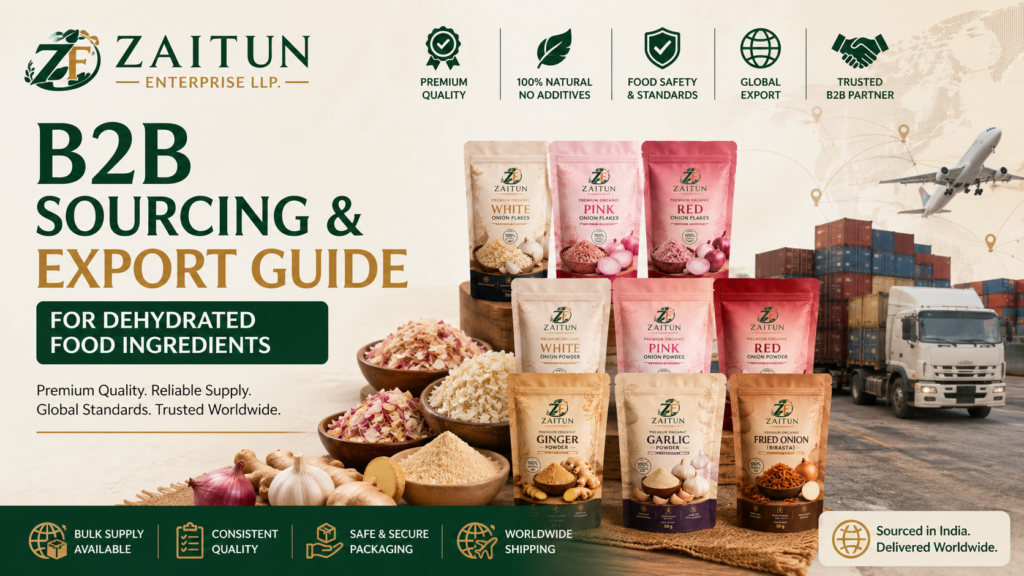
Managing global procurement lines for high-volume commercial food manufacturing requires more than evaluating raw ingredient specs. When you source dehydrated onions, garlic, and ginger across international borders, your total landed cost and operational stability depend on export logistics efficiency, moisture-barrier packaging standards, and strict cross-border regulatory compliance. Maritime transit exposes ocean cargo to severe humidity fluctuations, temperature spikes, and extended customs hold times.
Understanding how to navigate container loading density, international customs documentation, and protective bulk packaging protects your factory inventory from container sweat, transit clumping, and costly border rejections.
Navigating Global Supply Networks for Dehydrated Food Ingredients
Building a resilient international supply chain requires direct integration with certified processing facilities located within primary agricultural zones. Sourcing directly from regional processors removes unnecessary broker markups, speeds up order fulfillment, and gives your procurement team full traceability from harvest field to container shipment.
When you coordinate bulk maritime purchasing, partnering with an established exporter of Dehydrated Food Ingredients ensures your shipments comply with destination-country import regulations. Commercial exporters utilize multi-stage quality checks, standardized container stuffing procedures, and specialized ocean-freight packaging to keep dry alliums free-flowing across multi-week sea voyages.
Critical Export Logistics and Packaging Standards
Shipping dry agricultural inputs across ocean routes introduces unique environmental hazards. Elevated relative humidity inside closed metal shipping containers can cause ambient moisture transfer, leading to severe product clumping, mold proliferation, and enzymatic degradation.
Protective Bulk Packaging Formats
To ensure product integrity from factory export bays to your processing plant floor, suppliers must implement layered packaging defenses:
- Moisture-Proof Poly-Liners: Heavy-gauge polyethylene or aluminum poly-foil inner bags act as primary moisture-vapor barriers, sealing out atmospheric humidity.
- Corrugated Outer Cartons: Multi-wall kraft paper bags or heavy-duty double-wall corrugated cartons provide structural strength for high-density pallet stacking inside shipping containers.
- Container Desiccant Packs: Hanging high-absorption desiccant bags inside ocean containers neutralizes ambient moisture before it condenses on outer packaging walls.
Product Portfolio for International Food Manufacturing
Global food brands require specialized cut sizes and fine powders tailored to specific automated processing equipment and end-product formulations.
Onion Varieties and Cut Formats
Different culinary applications require distinct physical cuts to achieve optimum rehydration performance and visual texture:
- Dehydrated Onion Flakes: Essential for canned stews, instant soup mixes, and frozen meal assembly where consumers expect visible vegetable pieces and authentic bite.
- Dehydrated Pink Onion Flakes: Provides mild, balanced sweetness for regional seasoning blends, meat marinades, and dry rubs. Partnering with a specialized supplier of Pink Onion Flakes ensures uniform piece dimensions and vivid natural color retention.
- Pink Onion Powder: Dissolves seamlessly into salad dressings, dry rubs, and snack coatings. Sourcing through a certified manufacturer of Pink Onion Powder secures uniform fine-mesh particle distribution.
- Dehydrated Red Onion Flakes: Widely utilized in instant noodle seasoning sachets, ethnic curries, and canned meat preparations. Procurement teams source via an established supplier of Red Onion Flakes for bold pungency and rich color.
- Red Onion Powder: Delivers rich, savory top notes to potato chip coatings, snack dustings, and savory batters. Securing supply through a verified manufacturer of Red Onion Powder keeps dry dusting lines operating smoothly.
- Dehydrated White Onion Flakes: The preferred choice for clear broths, pale sauces, and white dressings where dark specks ruin visual appeal. Sourcing through an experienced supplier of White Onion Flakes guarantees high visual clarity.
- White Onion Powder: Blends instantly into cream soups, dip bases, and brines without altering product color. Teaming up with a dedicated manufacturer of White Onion Powder ensures high solubility.
Garlic, Ginger, and Crispy Fried Specialty Lines
Alongside onions, garlic, ginger, and fried specialties complete the primary allium spectrum for industrial food manufacturing.
- Pure Garlic Powder: Delivers sharp allicin pungency without the peeling labor or high water content of raw garlic cloves. Procure through an established supplier of Garlic Powder to prevent filler adulteration.
- Dehydrated Ginger Powder: A crucial component in bakery formulations, sauce bases, tea blends, and Asian meal seasonings. Connect with a trusted supplier of Ginger Powder for authentic heat and volatile oil retention.
- Crispy Fried Onions: Widely used as visual garnishes or crunchy layers in packaged biryani kits, burgers, and baked casserole toppings. Sourcing through a specialized manufacturer of Fried Onion Birasta guarantees controlled oil content and long-lasting crispiness.
Global Compliance and Border Clearance Protocols
Customs hold times can quickly wipe out supply chain cost savings if export paperwork is inaccurate or incomplete. Procurement teams must require prospective international suppliers to provide comprehensive documentation prior to vessel loading:
- Phytosanitary Certification: Official agricultural clearance verifying shipments are free from plant pests, diseases, and regulated soil contaminants.
- Certificate of Analysis (COA): Batch-specific lab documentation detailing moisture levels, mesh size distribution, micro-counts, total plate count (TPC), and heavy metal screens.
- Traceability & Bill of Lading: Full lot numbers printed on every outer carton, linking finished bulk goods directly to raw agricultural harvest batches.
Sourcing Advantages: The Western India Supply Hub
Geographic origin dictates raw material dry solids percentage, crop availability, and export shipping timelines. The state of Gujarat in Western India stands as a global hub for high-solids allium cultivation and modern dehydration technology.
Working with an integrated Dehydrated Onion Garlic Ginger Manufacturer located near major deep-water ports like Mundra and Kandla reduces inland transport lead times and streamlines ocean booking schedules. Processing crops close to growing fields preserves high natural pyruvic acid levels, essential volatile oils, and vibrant natural colors. As an established manufacturer operating in this agricultural belt, Zaitun Enterprise provides international buyers with consistent bulk volume across all four calendar quarters.
Partnering with an experienced Dehydrated Food Ingredients Supplier simplifies international purchasing while ensuring full compliance with destination-country food safety standards. To review export shipping schedules, evaluate technical specifications, or request bulk contract pricing, feel free to reach out to us directly.
Frequently Asked Questions (FAQ)
What is the standard load capacity for a 40-foot High Cube (40HC) container of dehydrated onion flakes?
A standard 40HC ocean container accommodates approximately 12 to 14 metric tons of dehydrated onion flakes packed in corrugated cartons, depending on palletization and specific cut density. Fine powders allow higher packaging density, reaching up to 18 to 20 metric tons per container.
How do container desiccants protect dry cargo during maritime transit?
Container desiccants absorb ambient water vapor from the air inside the sealed container as temperatures fluctuate between day and night during sea voyages. This prevents water condensation from forming on container ceilings and dripping onto cardboard packaging.
Which shipping documents are mandatory for importing dehydrated alliums into North America or Europe?
Mandatory export documentation includes the Commercial Invoice, Packing List, Ocean Bill of Lading, Phytosanitary Certificate, Certificate of Origin, and batch-specific Certificates of Analysis (COA) verifying microbiological and chemical safety.